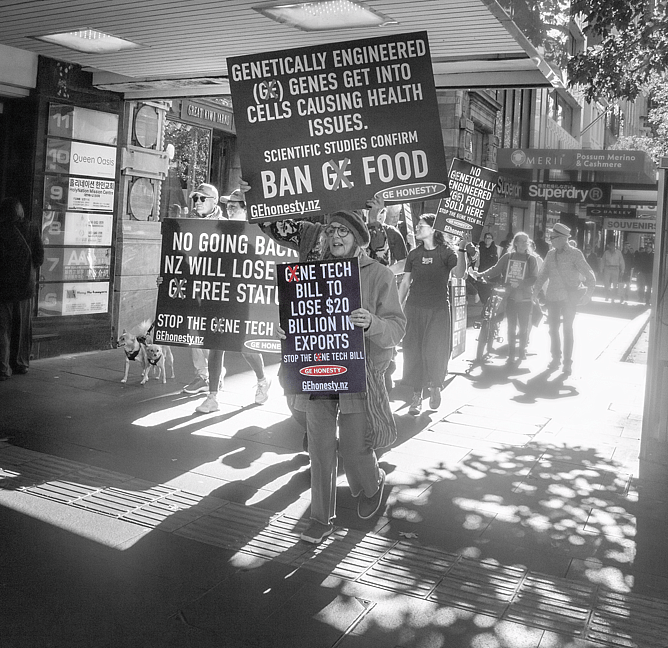
Once Released, It Can't Be Taken Back
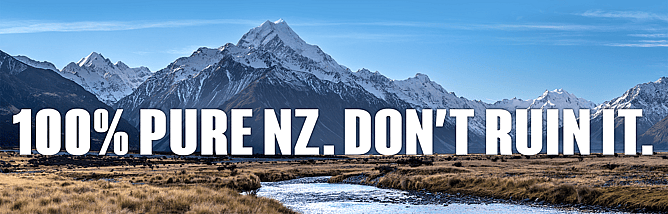
New Zealand is famous for two things: Hobbits and our 100% Pure, clean, green image.
We may not always live up to the latter, but we aspire to it, and it remains something we are patriotic about.
Right now, this identity is under serious threat. If the proposed Gene Technology Bill is passed, or the deregulation amendments currently being ‘slipped’ into the Hazardous Substances and New Organisms Act (HSNO) go ahead, they will remove critical safeguards that will affect our country, our health, our economy, and place our hard-earned global reputation at risk.
What this means
Food containing genetically engineered ingredients will no longer need to be labelled, removing your right to know what's in the food you buy.
Genetically engineered organisms, including plants, microbes, and animals, could be released into New Zealand’s environment and food supply, with no reliable way to stop genetic contamination or fully understand the long-term environmental and health impacts.
If contamination spreads to your land or to a neighbouring farmer, liability and clean-up costs could fall on taxpayers rather than those responsible.
New Zealand has some of the toughest biosecurity rules in the world
At the airport, we sign biosecurity declarations, fruit is confiscated, and our boots and tents are inspected or scrubbed.
Why? Because we understand a simple truth: once something is released into the environment, it is almost impossible to take back.
Protecting New Zealand’s unique environment has always mattered to us.
In 2003, towns and cities across the country resonated with the resolute cry of ‘KEEP NEW ZEALAND GE FREE!’
In 2026, the media silence hurts, celebrities are nowhere to be seen, and the opposition parties, in an election year, are eerily quiet.
What’s going on?
We have some of the strictest biosecurity rules in the world, and each year we spend millions to control introduced pests like possums, stoats, rabbits, and gorse. So why would we knowingly open our borders to such a risk?
Once something takes hold, it is extremely difficult, often impossible, to remove. Once genetic contamination happens, the promise of a 100% Pure New Zealand brand is no longer something we can honestly claim. And our exporters know it.
Our clean, green image isn’t just a slogan. It underpins a $20 billion export-driven economy built on trust in our food and farming.
A single contamination event doesn’t stay contained. It can spread beyond farms, across regions, and into the organic sector and export shipments overseas.
So why take that risk?
No trade-off is worth the potential financial harm to New Zealand’s sustainability sector.
Why is a change this significant being discussed with so little media attention or public awareness?
GE Honesty believes the Gene Technology Bill and the HSNO Amendment Bill go too far.
Once genetic engineering is released into the environment, it cannot be undone. That is a practical reality, not a political opinion.
This decision should not be made behind closed doors or driven by vested interests.
This isn’t just policy. It’s the future of New Zealand.
KEEP GENETIC ENGINEERING IN THE LAB, NOT IN OUR FOOD.
SAY NO TO GMOs.
Economic Impact
The New Zealand Institute of Economic Research (NZIER) prepared an independent economic assessment for Organics Aotearoa New Zealand after no Government economic analysis of the Gene Technology Bill's impacts had been released.
The report examined the potential effects on both New Zealand's primary exports and tourism. It concluded that the environmental release of genetically engineered organisms could reduce exports from the primary sector by up to $20 billion annually. It also warned that a science-only approach to regulation ignores real-world evidence from previous attempts to commercialise genetically engineered agricultural products.
______________________________
Ref: New Zealand Institute
of Economic Research (NZIER).
Potential Costs of Regulatory Changes for Gene Technology: Economic Assessments of an MBIE Proposal.
NZIER report to Organics Aotearoa New Zealand. November 2024.